
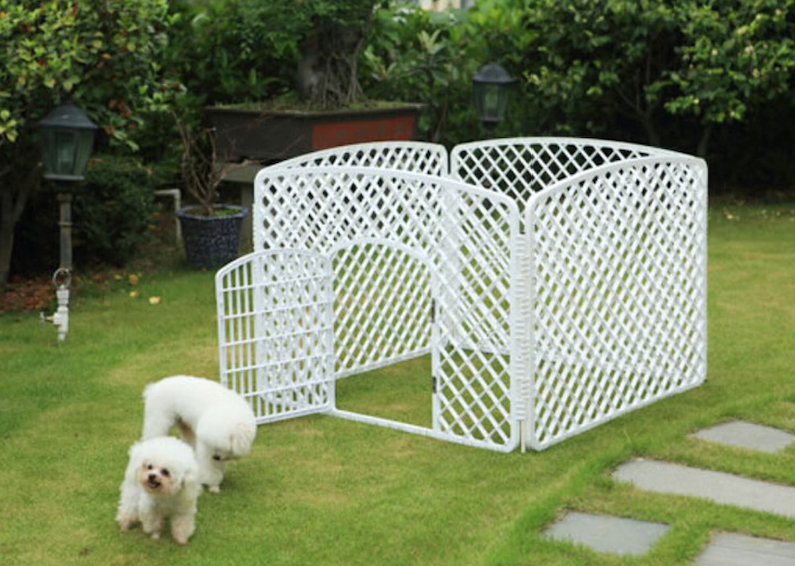
A dog enclosure can give your pet a defined space to relax, play and spend time safely. It can also make life easier for you by helping you manage your dog’s environment without constantly telling them where they can and can’t go.
The key is choosing an enclosure that actually suits your dog. Size, energy levels, behaviour and the space available in your home or yard all matter. A small, quiet dog may need a very different setup from a large, energetic dog that likes to investigate everything in sight.
The goal isn’t simply to create a barrier. You want to create a space your dog can use comfortably and safely.
When Can a Dog Enclosure Be Useful?

An enclosure gives you a practical way to establish boundaries while still giving your dog room to move. A defined space helps with:
- Supervision: You can keep your dog in a designated area while still keeping them nearby.
- Training: An enclosure can help establish boundaries and encourage calm behaviour.
- Household management: It can keep dogs away from kitchens, work areas or other restricted spaces.
- Outdoor time: A suitable enclosure can provide a controlled area for dogs to spend time outside.
- Rest: Some dogs appreciate having a familiar place where they can settle away from household activity.
An enclosure shouldn’t replace walks, play or interaction. Think of it as one part of your dog’s overall environment rather than somewhere they should spend most of their day.
What to Consider When Choosing
When shopping for a pet enclosure, dog size and energy levels are the first things to evaluate, so start with your pet’s actual needs rather than simply choosing the biggest or smallest option.
Your dog should have enough room to stand, turn around, lie down and move comfortably. If you plan to include a bed, water bowl or toys, you also need enough floor space for these without making the area feel cramped.
Next, think about how your dog behaves. A calm dog may be perfectly happy with a straightforward setup, while a more energetic dog needs enough room to move around and stay occupied. A dog that likes to jump or climb may also require taller or more secure barriers.
Puppies deserve extra consideration because they grow quickly. A setup that works perfectly today may become too small surprisingly soon. If you’re choosing an enclosure for a growing dog, consider how much space they’ll need as they get bigger.
You should also think about how much time your dog will spend inside. An enclosure used occasionally needs a different setup from one that forms part of your dog’s regular daily routine.
Features to Look For
Once you’ve worked out how much space you need, look at the enclosure itself. Good design can make the space safer, easier to manage and more convenient to use.
Prioritise Practical Features
When comparing dog enclosures, pay attention to:
- Secure construction: Your dog shouldn’t be able to easily push, knock over or escape through the enclosure.
- Appropriate height: Choose a height that suits your dog’s size and jumping ability.
- Safe spacing: Openings should prevent your dog from getting their head or limbs caught.
- Easy access: Doors or gates should allow you to enter and clean the enclosure without hassle.
- Durable materials: Choose materials that can cope with your dog’s activity and the environment where you’ll use them.
- Easy maintenance: Surfaces that are straightforward to clean will make everyday upkeep much easier.
Setting Up a Comfortable Enclosure
Once you’ve chosen the pet enclosure dog option, the way you arrange it matters just as much. You want the space to feel comfortable rather than empty. A practical arrangement should include:
- A comfortable bed: Give your dog somewhere soft to rest away from the busiest parts of the household.
- Fresh water: Keep a stable water bowl in an accessible position where it is less likely to be knocked over.
- A few toys: Choose toys appropriate for your dog’s size and chewing habits, and rotate them occasionally to keep things interesting.
- A clear movement area: Leave enough open floor space so the area doesn’t feel cramped.
You should also consider the location. Place the enclosure somewhere your dog can be part of household life without sitting directly in the middle of constant foot traffic.
Indoor vs. Outdoor Setups
The best enclosure for your dog will depend partly on where you plan to use it.
Indoor Enclosures
Indoor setups need to work with the layout of your home. Look for a design that fits comfortably without blocking doors, walkways or essential furniture.
The floor underneath matters, too. Place the enclosure on a surface that’s easy to clean and won’t become damaged by water spills or accidents.
If you’re using an enclosure for a puppy, keep it away from hazards such as electrical cords, small objects and furniture they might try to chew.
Outdoor Enclosures
Outdoor spaces require a little more planning. Check the ground around the enclosure and make sure your dog can’t easily dig underneath or push against the sides to create an escape route.
Weather protection is essential. Your dog should have somewhere shaded and protected from rain, wind and excessive heat.
You also need to check the enclosure regularly. Outdoor equipment is exposed to the elements, so look for signs of wear, loose components or damaged sections.